|
On-grid Solar System |
||
|
General |
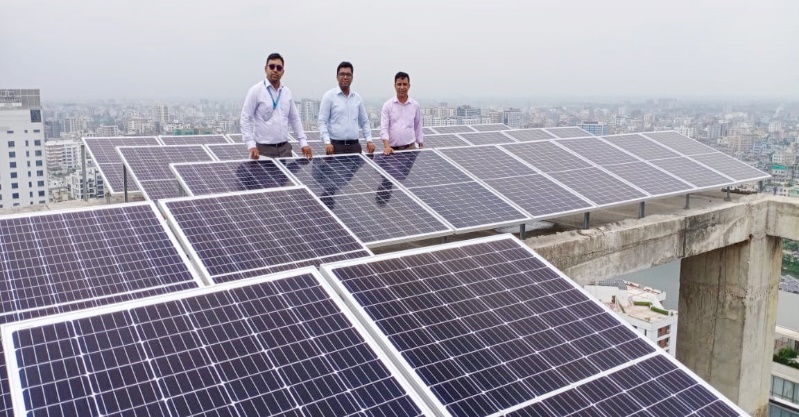
A grid-connected photovoltaic power system or grid-connected PV power system is electricity generating solar PV power system that is connected to the utility grid. A grid-connected PV system consists of solar panels, one or several inverters, a power conditioning unit and grid connection equipment. They range from small residential and commercial rooftop systems to large utility-scale solar power stations. Unlike stand-alone power systems, a grid-connected system rarely includes an integrated battery solution, as they are still very expensive. When conditions are right, the grid-connected PV system supplies the excess power, beyond consumption by the connected load, to the utility grid. |
|
|
Capacity |
Capacity range for On-Grid Solution is from 1Kw up to few Mega Watts (as per client’s requirement). |
|
|
Advantages |
shine, any installation gives a reasonably predictable average reduction in carbon consumption. |
|
|
Off-grid Solar System |
||
|
General |
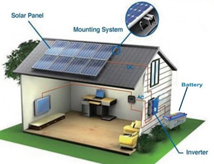
Off-the-grid is a system and lifestyle designed to help people function without the support of remote infrastructure, such as an electrical grid. In electricity, off-grid can be stand-alone power system or mini-grids typically to provide a smaller community with electricity. Off-grid electrification is an approach to access electricity used in countries and areas with little access to electricity, due to scattered or distant population. The term off-the-grid (OTG) can refer to living in a self-sufficient manner without reliance on one or more public utilities. Namely the electrical grid. People who adopt this lifestyle are called off-girders. |
|
|
Off-Grid/Grid interactive Solution: |
We can provide solar powered off grid solution of any capacity according to customer’s demand. |
|
|
Economic consideration |
In situations where grid parity has been reached, it becomes cheaper to generate one’s own electricity rather than purchasing it from the grid. This depends on equipment costs, the availability of renewable energy sources (wind, sun), and the cost of a grid connection. For example, in certain remote areas a grid connection would be prohibitively expensive, resulting in grid parity being reached immediately. |
|
|
Popularity |
On 13 April 2006, USA Today reported that there were “some 180,000 families living off-grid, a figure that has jumped 33% a year for a decade,” and cited Richard Perez, publisher of Home Power Magazine, as the source. Assuming the same rate of growth, there would be a quarter million off-grid households in the United States by late 2007. Because many Third World citizens have never had the chance to go on the grid, current estimates are that 1.7 billion people live off-grid worldwide. A wave of TV shows and articles came out after the publication of “Off the Grid, Inside the Movement for More Space, Less Government and True Independence in Modern America” by Nick Rosen in 2010. |
|