
Electrical Sub-station
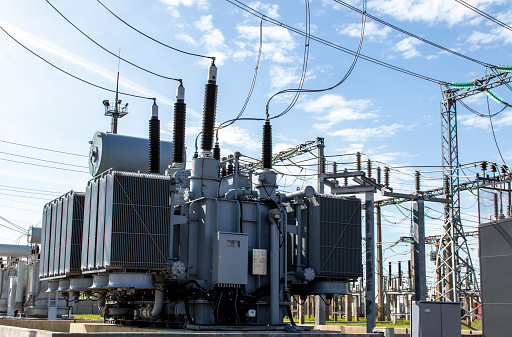
Electricity is an essential commodity that powers almost all aspects of modern life. From the lighting in our homes to the manufacturing processes that produce our goods, electricity is an indispensable resource. However, before this energy reaches our homes, it goes through a complex network of electrical substations.
An electrical substation is a facility that transforms high-voltage electricity from power generators into a lower voltage that can be used by households and businesses. It is the vital link between power plants and our homes, delivering reliable electricity to customers.
Substations come in different shapes and sizes, depending on their location, purpose, and capacity. Some are small and can be located in a residential area, while others are large and can occupy several acres of land. Despite their size, all substations serve the same function, to transform electrical power and distribute it to the local power grid.
One of the essential components of a substation is the transformer. Transformers are devices that change the voltage of electricity from high to low or vice versa. In electrical power generation, electricity is generated at a high voltage, typically around 10,000 to 25,000 volts. This high voltage is then stepped up using transformers to around 500,000 to 765,000 volts for transmission across long distances. Once the power reaches the substation, it is stepped down to a lower voltage level, typically around 12,000 to 120,000 volts, which is safe for use in homes and businesses.
Another critical component of a substation is the switchgear. Switchgear is used to control and isolate electrical power in the substation, allowing for maintenance and repairs to be carried out safely. Switchgear is also used to protect the substation and the local power grid from overloads and short circuits.
Substations are also equipped with circuit breakers that protect the electrical network by breaking the circuit in case of a fault or overload. Circuit breakers can be manually or automatically operated and are designed to handle different levels of electrical power.
The design and layout of electrical substations are critical to ensure safety and efficient power distribution. They are typically located near the power generation plant or along transmission lines to minimize energy losses. The substation's location must also consider environmental and safety factors, such as potential hazards from nearby structures, accessibility, and seismic risks.
In summary, electrical substations are crucial components of the electrical power grid, enabling the transmission and distribution of electricity from power generation plants to homes and businesses. They play a vital role in ensuring the safe and reliable delivery of electricity, making them a critical infrastructure for modern society.